Hen welfare
These are the questions we hear most about how the hens are doing. Here are the answers, and the science behind them.
Does the night-time infrared camera disturb the hens?
No. At night the camera lights the coop with near-infrared light, which hens cannot see. A hen sees more colours than we do, near-ultraviolet included, but not the infrared beyond red. Camera infrared lamps shine at around 850–940 nanometres, well outside what hens can see. Their daily rhythm and sleep are set by light sensors in the eyes, in the pineal gland and deep in the brain, and none of these responds to that wavelength either, so the infrared light does not disturb their melatonin production or their night’s rest. For the hens, the coop stays just as dark as it would without a camera.
Don’t the hens get cold in winter?
No. A healthy, fully feathered adult hen is comfortable down to about minus 5 °C (23 °F): the air trapped between her fluffed-up feathers insulates well, at night the hens huddle together on the perch, and in the cold they eat more, which makes more body heat. In winter the bottleneck is not cold but moisture. Hens give off a lot of moisture through breathing and droppings, and in an over-insulated, closed coop it has nowhere to go: the litter turns damp, ammonia builds up and irritates their airways and eyes, and in clammy air their combs get frostbite more easily. That is why fresh air matters more than a perfectly insulated coop. For their health, draught-free ventilation, dry litter and low ammonia count for far more than the temperature.
Doesn’t the cap on her back bother the hen?
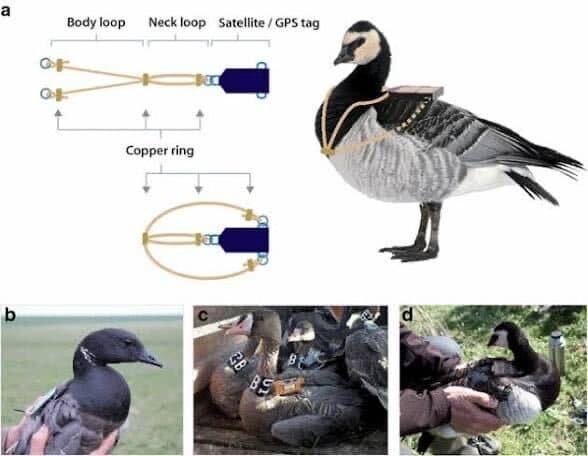
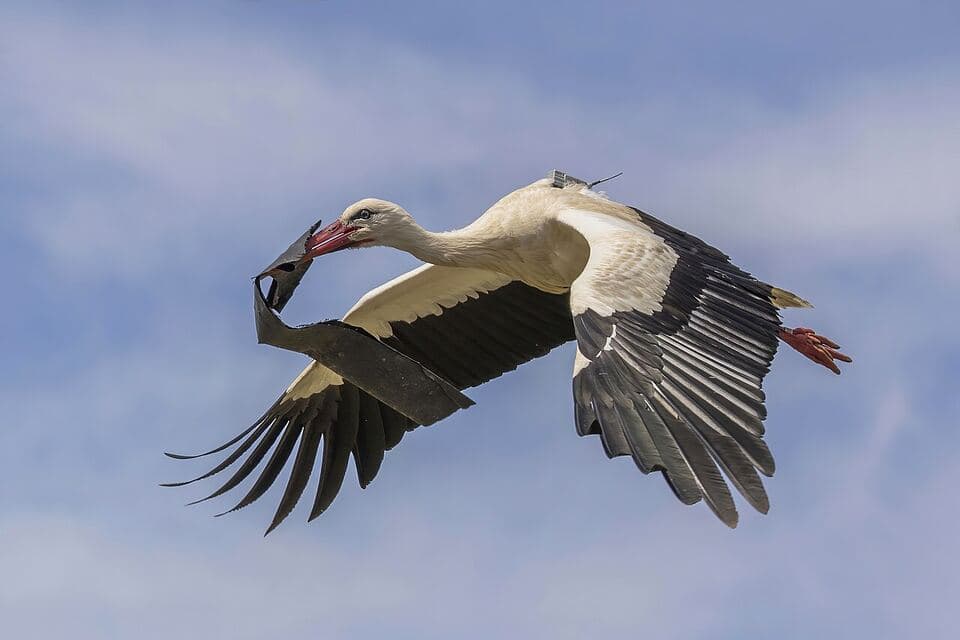
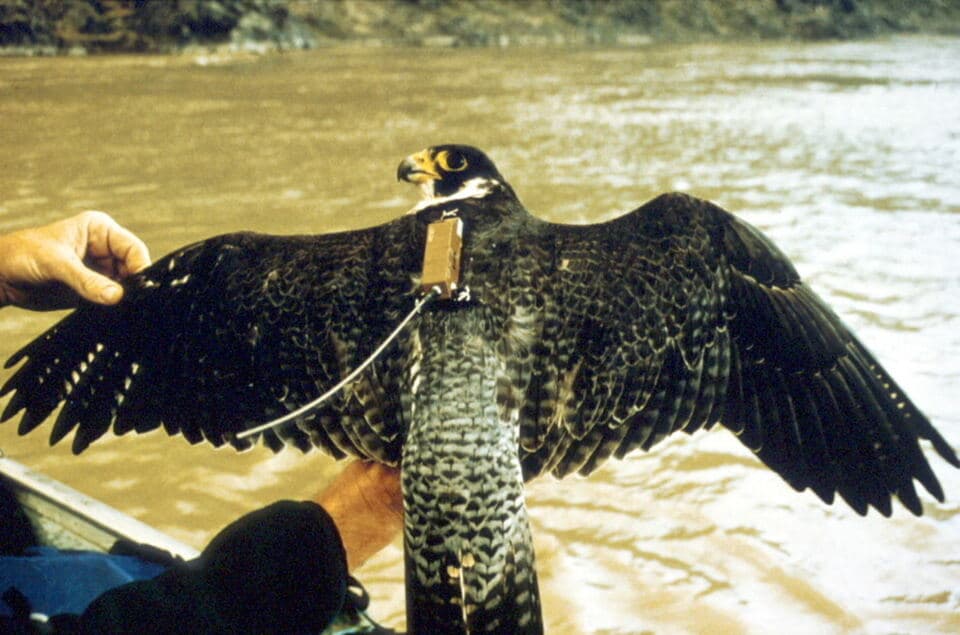
No. The cap is the lid of a small case and carries the hen’s serial number; the case is where her step-counter chip goes. Even with the chip it all weighs only about 10 grams. On a 2 kg (4.4 lb) hen that is half a percent of her body weight, while the rule of thumb in bird research is that a tag should stay under 3 percent. A stretchy figure-eight harness holds the case, and it does not get in the way of walking, scratching or dust bathing. This is an established scientific method: small chips go into leg rings, larger tags onto the bird’s back. Researchers follow homing pigeons and the migration of wild birds such as storks the same way, often with much heavier solar-powered GPS tags that stay on the bird all year round, even for years.
Isn’t the polytunnel too cold in winter? Doesn’t it need heating?
No, and we do not heat it. Some groups spend the winter in a single-layer polytunnel on deep litter. The deep litter is the tunnel’s own heating: the bottom of the thick bedding slowly composts, which gives off gentle warmth from below while the surface stays dry and soft. By day the film lets in the winter sun and warms up, and the hens insulate themselves with their feathers and huddle together just as they do in the coop. The tunnel’s main job is to keep out wind, rain and snow, because for a hen being wet or in a draught is far worse than the cold itself. Heating would do more harm than good: heat lamps are a common cause of coop fires, warm air inside against cold air outside means more condensation, and hens kept warm never adapt to the cold, so a power cut would hit them hard. Here too what matters is ventilation, so moisture does not condense on the film, and dry deep litter topped up with fresh bedding.